
By Koehn Thomas; editorial contributions by Emma Stratton
TWU’s Multimedia Journalism students explored the impact of online gaming and its effects on
communication among students and uncovered three key messages.
At the beginning of the semester, the students found a connection bonding in online video
games. This led to the class researching the history and evolution of online gaming.
While researching, they found that in the early 2000s, gamers began to collaborate with each
other, which was the gateway to toxic gaming environments.
Fast forwarding to the present, “43% [of players] reported being purely victims of other players’ toxicity, and a considerable proportion of individuals (66%) reported that they had personal involvement in toxic behaviors in the past year” (Zsila 2).
This finding led the class to surveying their peers at TWU to uncover if our students are
experiencing the same negativity with others in online gaming environments.
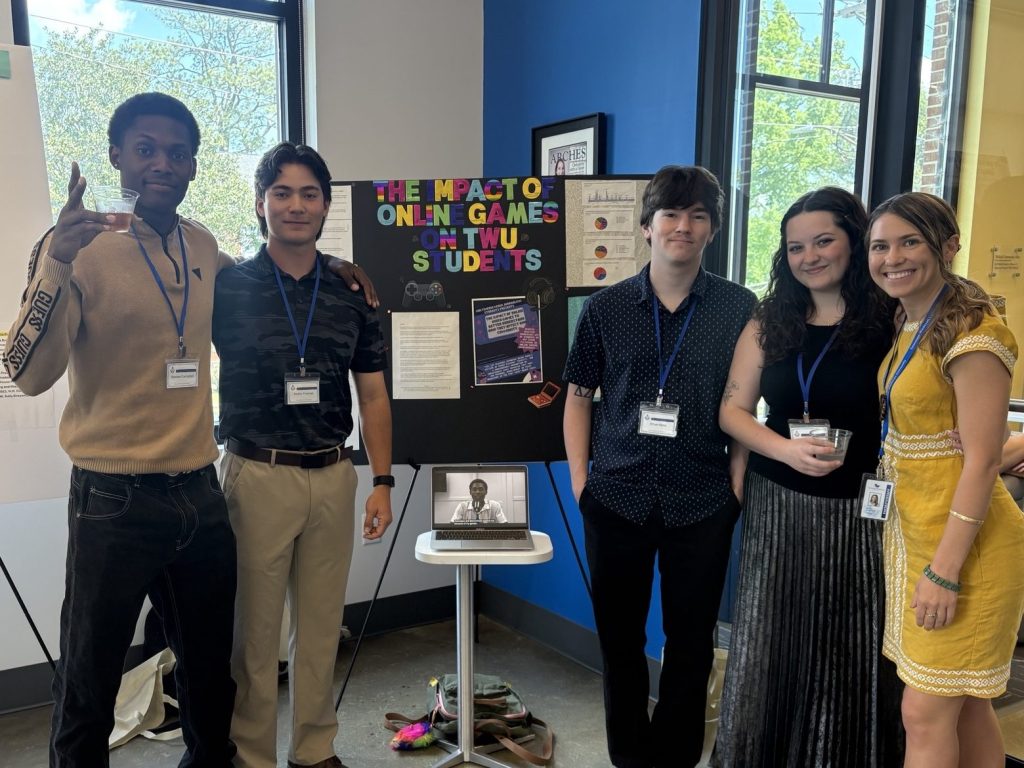
After researching, conducting student surveys, and interviewing other students on campus, they found the following:
Key Message 1: Students find it easier to communicate with people they know – whether that’s
online or in real life, on campus.
· 95% of students say it is easy to communicate with people they know in gaming environments
· 89% of students believe it is easy to communicate with people they know on campus at TWU
Key Message 2: Students reported more negative communication in the gaming environment,
perhaps due to the anonymity that gaming offers.
The chart below compares negative commentary reported in online games vs. in real life (IRL).
The chart below compares positive commentary reported in online games vs. in real life (IRL).
Key Message 3: Despite the negativity experienced in gaming environments, people are strongly
opposed to filtering/communication restrictions.
Free speech principles were cited as a top concern:
· 67% of students opposed filtered speech in gaming environments
· 78% of students opposed filtered speech in-person on-campus
Finally, the discoveries highlight a complicated relationship between connection and
communication in online gaming. While gaming creates meaningful opportunities for social
interaction especially among friends it also fosters environments where negative behavior is
more common.
With that in mind, students value the ability to communicate freely and are
hesitant to support restrictions, even in the face of toxicity. This is mostly due to students
wanting to protect their first amendment rights.
Based on these insights, we the students believe there needs to be an alternative to balance open
expression and positive, respectful interactions online.